
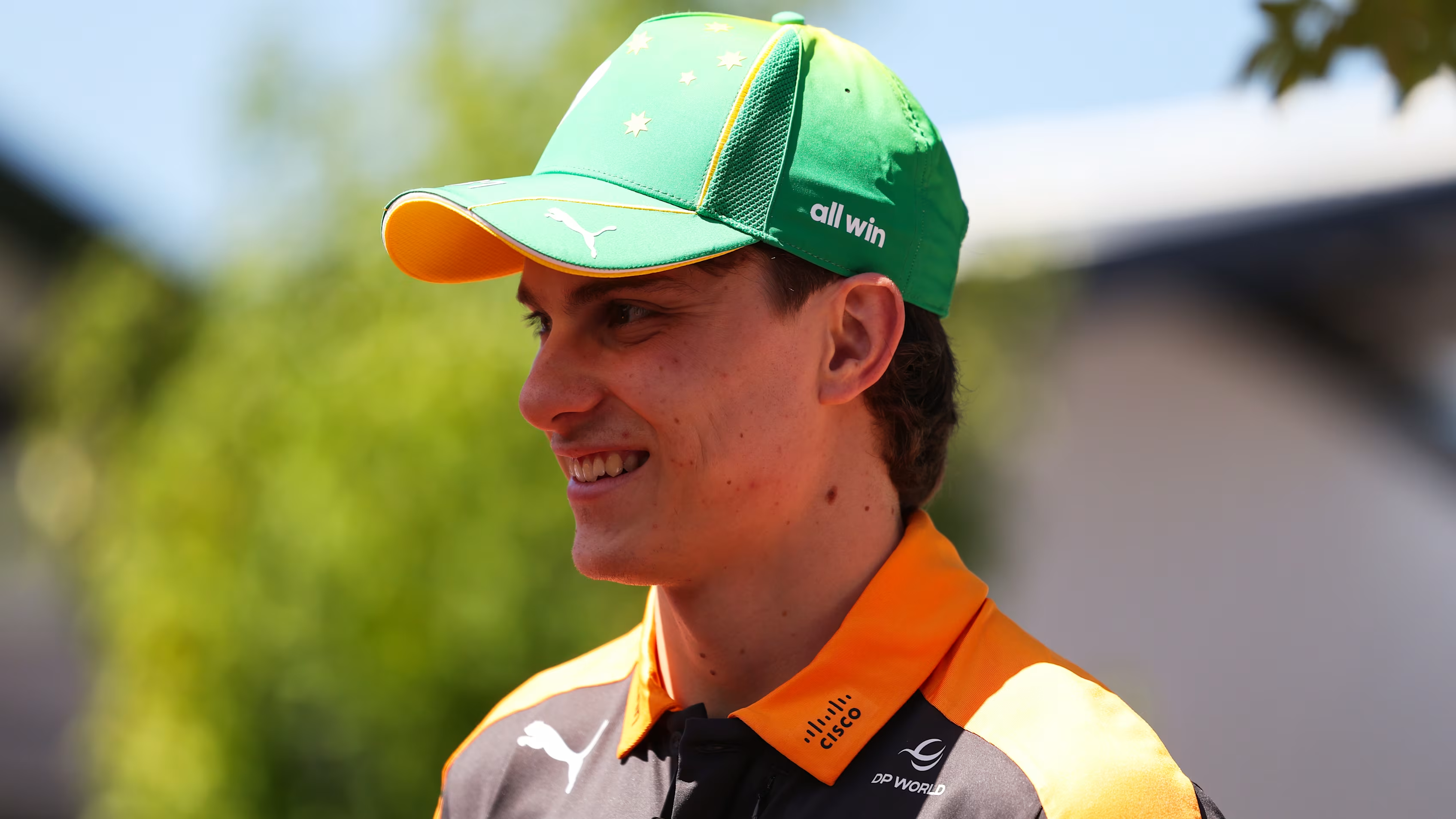
Oscar Piastri says F1 drivers can sometimes feel like “passengers” because AI controls energy deployment in the 2026 cars. Here’s why Baku could expose the issue.
Formula 1 drivers are supposed to be the ones controlling the car. Oscar Piastri has now explained why that does not always feel true in the new generation of 2026 machines.
The McLaren driver admitted that F1 drivers can sometimes feel like “passengers” because artificial intelligence and algorithms now play such an important role in deciding when electrical energy is deployed during a lap. With the Azerbaijan Grand Prix approaching and its long straights putting energy management under the spotlight, Piastri’s comments have raised fresh questions about how much control drivers actually have over the new cars.
Read more: Lewis Hamilton Wants Ferrari to Change Its Rules After Monza Drama
Why Do Drivers Have Less Control in 2026?
The biggest change is hidden inside the power unit. The 2026 regulations have dramatically increased the importance of electrical energy, with the cars using a much larger contribution from the battery and electric motor than previous generations.
Drivers do have controls available to them, particularly for overtaking, but Piastri explained that they have very little direct control over exactly where the main electrical deployment happens around a lap. Instead, algorithms use data from the circuit and power unit to determine how energy should be distributed.
That can create a strange situation for a driver. Two laps can feel noticeably different depending on how the system manages available energy, even though the driver is following the same racing line and making the same inputs. Piastri was asked directly whether it sometimes feels as though he is a passenger in an AI programme that is still learning. His answer was simple: “Sometimes, yes.”
Why Was Spa So Frustrating for Oscar Piastri?
The problem becomes much more obvious on circuits where the cars spend long periods at high speed. Piastri highlighted Spa Francorchamps as an example. He explained that there were sections of the lap where McLaren’s car was effectively running only on its combustion engine because the battery assistance had been depleted. That meant the car could have significantly different power characteristics from one part of the circuit to another.
For a driver, that creates an unusual challenge. Instead of simply deciding when to attack and when to conserve tyres or fuel, part of the lap can be dictated by how the energy management system has learned to operate around the circuit. Piastri also pointed out that tiny differences in the software and energy deployment could have a major impact when qualifying margins are extremely small. In a tightly packed field, a driver may lose performance because of something outside their direct control rather than because they made a mistake.
Also read: Azerbaijan Relaxes Travel Norms for Baku F1 Grand Prix
Why Could Baku Expose The Problem Again?
The timing of Piastri’s comments is particularly interesting because Formula 1 is heading to Baku this week. The Azerbaijan Grand Prix takes place on Saturday, September 26, with the 6.003 kilometre Baku City Circuit combining slow corners around the old city with long, high-speed sections. That combination makes energy deployment especially important. The long acceleration zones can expose differences in how effectively each car manages its electrical power, while the heavy braking zones offer opportunities to recover energy.
Piastri previously explained that circuits such as Spa and Silverstone can make the problem worse, while tighter tracks with shorter straights tend to reduce the effect. Baku therefore provides another interesting test of whether the new systems can give drivers predictable performance throughout a lap.
Is AI Changing What It Means To Drive An F1 Car?
The controversy is not really about drivers refusing to use technology. Formula 1 has relied on increasingly sophisticated electronic systems for years. The difference in 2026 is the extent to which electrical energy has become central to performance. The FIA’s own technical regulations and driver discussions have highlighted how much energy deployment now influences the experience behind the wheel.
For Oscar Piastri, the problem is not that the technology exists. It is that there are moments when the driver cannot fully influence one of the most important performance variables. That raises a fascinating question for the future of Formula 1. As the sport becomes more efficient and technologically advanced, how much of the performance should come from the driver and how much should come from the systems managing the car?
Baku could provide the next answer as the 2026 cars return to one of the most demanding energy management circuits on the calendar. Do the new F1 regulations give drivers too little control over their own cars?
Explore: Valentino Rossi – The Doctor Who Made Speed His Way of Life