
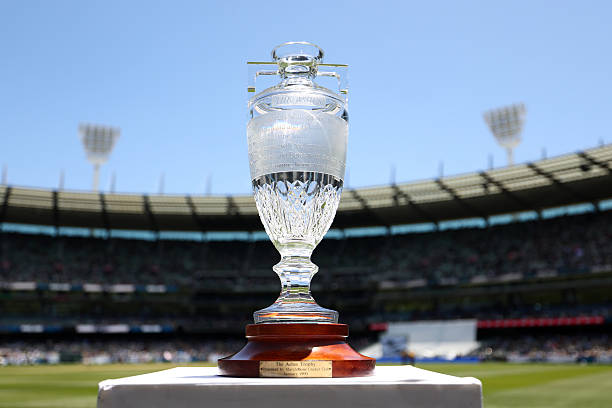
The Ashes is one of the oldest and most famous rivalries in international cricket, bringing England and Australia together in a Test series that has produced some of the sport’s most memorable matches, players and controversies. The rivalry began in 1882 after Australia defeated England at The Oval in London, and the name came from a newspaper obituary that declared English cricket dead. More than 140 years later, the Ashes remains a major event in the cricket calendar, with the two teams competing for a trophy that represents one of the sport’s strongest traditions.
The series is played in Test cricket, which means matches can last up to five days. Unlike a tournament with several participating teams, the Ashes is contested only between England and Australia. The teams usually play five Tests in a series, although the number of matches was different in some of the early contests. Australia won the 2025–26 Ashes series 4–1, which was the latest completed men’s series as of September 2026.
What Is The Ashes?
The Ashes is the name given to the Test cricket rivalry between England and Australia. It is not a separate world championship or an international tournament involving multiple countries. Instead, it is a series of matches between these two teams, usually played every two or four years, with the host country alternating between England and Australia. The series has a long history dating back to the 19th century, and its name comes from a satirical newspaper report following an Australian victory in England.
The rivalry has become a symbol of cricket’s traditional contest between bat and ball, with the two teams competing over several matches rather than a single final. The series is known for its high level of competition, strong public interest and the importance attached to winning in the opponent’s home country.
Read More: India vs Pakistan: The Greatest Rivalry in Cricket
History of The Ashes
The Ashes has a history stretching back to the early days of Test cricket. England and Australia had already played international matches before the name was created, but the 1882 match at The Oval became the starting point of the Ashes rivalry.
The first Test between the two teams was played in Melbourne in March 1877. Australia won that match by 45 runs. The match was later recognised as the first Test in cricket history, and the rivalry between the two countries continued to grow through the following decades.
The 1882 match at The Oval gave the rivalry its name, while the 1882–83 tour of Australia helped establish the Ashes as a contest for a symbolic prize. England’s team, led by Ivo Bligh, played a series of Tests against Australia and won two of the three main matches.
The Ashes became a regular part of international cricket in the years that followed. England and Australia played a number of series during the late 19th century, and the competition continued to grow in importance as Test cricket became more established. The two teams have since played across different eras, from the early days of cricket to the modern game, with the Ashes remaining one of the sport’s most recognisable contests.
The First Ashes Series in 1882–83
The first series commonly associated with the Ashes took place in Australia during the 1882–83 season. England’s team was led by Ivo Bligh, who had promised to bring back the ashes after Australia’s victory at The Oval.
The tour featured three main Tests. Australia won the first match at Melbourne, but England won the next two Tests at Melbourne and Sydney. England therefore won the series 2–1. A fourth match was also played later, but it was not part of the main series and its status has been debated.
After the series, Bligh was presented with a small urn that is believed to contain the ashes of a burnt cricket bail. The urn became associated with the Ashes and was later given to the Marylebone Cricket Club by Bligh’s widow.
How The Ashes Series Works
The Ashes is generally played as a five-match Test series. Each Test can last up to five days, and the team that wins the most matches wins the series. If the series is drawn, the team that held the Ashes before the contest retains them.
The series is usually played in one country, with the host nation alternating between England and Australia. England’s home series are generally played during the English summer, while Australia’s home series are played during the Australian summer.
Unlike a limited-overs tournament, there are no group stages or knockout rounds. The result is determined by the combined results of the Test matches. This format allows the teams to compete over a longer period, with batting, bowling, fitness and tactical planning becoming important across the series.
The Ashes in the Early Years
The early years of the Ashes were marked by strong English performances. England won several of the first series, including a long run of victories during the 1880s. Australia gradually became more competitive, and by the end of the 19th century the two teams were closely matched.
The rivalry grew in importance as Test cricket developed. England and Australia played regular series, and the Ashes became a major part of the international cricket calendar. The contest also reflected the cricketing relationship between Britain and Australia during the period when Australia was still a British colony.
Most Runs in Ashes History
Don Bradman holds the record for the most runs in Ashes history, with 5,028 runs. His record reflects his long period of dominance in the rivalry and his status as one of the greatest batsmen in Test cricket.
Bradman played in a period when Australia and England were the two strongest teams in international cricket, and his performances against England helped define several Ashes series.
Most Wickets in Ashes History
Shane Warne holds the record for the most wickets in Ashes history, with 195 wickets. The Australian leg-spinner was one of the most important players in the rivalry during the 1990s and 2000s.
Warne played a major role in Australia’s dominance during the late 1990s and early 2000s. His performances against England helped Australia win several Ashes series during that period.
Most Successful Team in Ashes History
Australia is the most successful team in Ashes history, having won more series than England. Australia has also held the Ashes for long periods, including a record run of eight consecutive series victories from 1989 to 2002–03. England also held the Ashes for eight consecutive series between 1882–83 and 1890.
The rivalry has been closely contested across different eras, with both teams enjoying periods of dominance. Australia’s overall success reflects its strong performances in the early years and during the late 20th and early 21st centuries.
The Ashes 2027
The next men’s Ashes series is scheduled to take place in England in 2027. The series will be played across five Test matches, with the exact dates and venues determined by the England and Wales Cricket Board.
The 2027 series will continue the long-standing tradition of the two teams competing for the Ashes, with Australia entering the contest as the holders after its 4–1 victory in 2025–26.
The Ashes: Key Facts
- The Ashes is a Test cricket series between England and Australia.
- The rivalry began in 1882 after Australia’s victory at The Oval.
- The first series commonly associated with the Ashes took place in 1882–83.
- The original Ashes urn is kept at the MCC Museum at Lord’s.
- The series is usually played every two or four years.
- The most recent completed men’s series was the 2025–26 Ashes, which Australia won 4–1.
- The next men’s Ashes series is scheduled for 2027 in England.
- Don Bradman holds the record for most runs in Ashes history.
- Shane Warne holds the record for most wickets in Ashes history.
- Australia has won more Ashes series than England.
Read More: Ranking the Top Power Hitters in Cricket History