
A Contest That Goes Beyond the Game
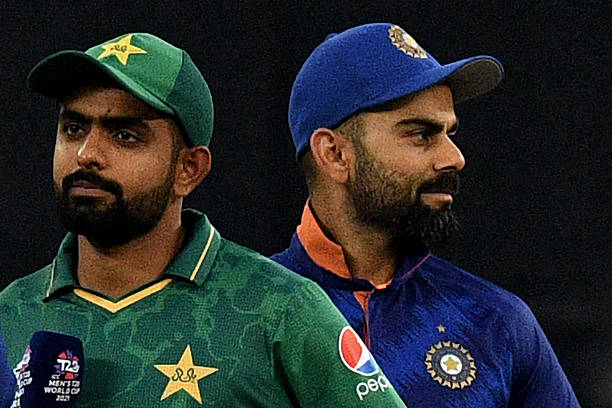
The India vs Pakistan rivalry is not just cricket’s greatest contest; it is one of the most intense and politically charged sporting rivalries in the world. Every match transcends sport, becoming a high-stakes spectacle fuelled by decades of shared history, national pride, and unresolved geopolitical tensions. When these two teams meet, the world watches, and the atmosphere is unlike anything else in cricket.
Historical Roots: A Rivalry Born of Partition
The story of this rivalry begins not on a cricket pitch, but with the Partition of British India in 1947. The division, which created India and Pakistan, was accompanied by widespread violence and the displacement of millions, laying the foundation for a complex and bitter relationship. This history has directly shaped the cricketing calendar. Bilateral cricketing ties have been repeatedly interrupted by major political events.
No cricket was played between the two nations from 1962 to 1977 due to the wars of 1965 and 1971. The 1999 Kargil War and the 2008 Mumbai terror attacks also led to long suspensions of bilateral series. The 2008 Mumbai attacks, which killed over 160 people, were a major turning point. They led to a complete freeze on bilateral cricket. Since then, the two teams have only met in multi-nation tournaments like the ICC World Cups and the Asia Cup.
Head-to-Head Record: A Tale of Formats
Across all formats, the two nations have played 212 matches, with Pakistan winning 88 and India winning 81. In Test cricket, they have played 59 matches, with Pakistan winning 12, India winning 9, and 38 ending in draws or no results. In ODIs, they have played 136 matches, with Pakistan winning 73, India winning 58, and 5 ending without a result. In T20Is, India dominates with a 14-3 record from 17 matches. The most glaring statistic is in the ICC ODI World Cup, where India holds a perfect 7-0 record against Pakistan.
The Greatest Clashes: Matches That Defined Eras
Certain India vs Pakistan matches have become legendary, not just for their cricket but for the drama surrounding them. The 1996 World Cup quarter-final in Bengaluru was played in front of a hostile crowd. India won by 39 runs, with a memorable moment being Venkatesh Prasad dismissing Aamer Sohail after the Pakistani opener had taunted him.
The 2003 World Cup group stage match at Centurion is often cited as the greatest India-Pakistan match. Sachin Tendulkar played a masterful 98 runs against a fearsome pace attack of Wasim Akram, Waqar Younis, and Shoaib Akhtar. His innings set up a six-wicket victory for India. In the 2007 ICC World T20 final in Johannesburg, India, led by a young MS Dhoni, beat Pakistan in a thrilling finale, with Irfan Pathan dismissing Shahid Afridi for a golden duck.
The 2011 World Cup semi-final in Mohali was a tense, high-scoring affair that India won by 29 runs. This victory was a crucial step on India’s path to lifting the World Cup on home soil. In the 2022 T20 World Cup in Melbourne, Virat Kohli played one of the greatest T20 innings ever, an unbeaten 82 off 53 balls, to guide India to a miraculous victory from a seemingly impossible position at 31/4.
The Economics: A Commercial Goldmine
The financial stakes for an India-Pakistan match are astronomical. A single encounter in an ICC tournament is estimated to be worth around $180 million to $250 million in revenue. The 2023 World Cup match between the two drew a staggering 173 million television viewers and 225 million digital connections in India alone.
Broadcasters can command up to ₹40 lakh for a 10-second advertisement slot during these matches. The match is so valuable that its cancellation could lead to losses of hundreds of millions of dollars for the ICC and broadcasters. As a result, the ICC ensures these matches are scheduled in every major tournament to secure a significant portion of its revenue.
Cricket Diplomacy: A Bridge and a Weapon
Historically, cricket has been used as a tool for diplomacy. The most famous example is Pakistan’s President General Zia-ul-Haq’s 1987 visit to India to watch a Test match, a “Cricket for Peace Initiative” that helped defuse military tensions. More recently, Indian Prime Minister Manmohan Singh and his Pakistani counterpart Yousuf Raza Gilani met at the 2011 World Cup semi-final, using the occasion to hold talks. However, this diplomatic aspect often cuts both ways.
The Rivalry Today: A Changing Dynamic
In recent years, the competitive balance has shifted dramatically. India has dominated, winning six of the last eight ODIs between the two sides. This has led to a narrative of a “one-sided rivalry”. A recent example was the 2026 Women’s Asia Cup, where India bowled Pakistan out for a record-low 55 runs and chased the target in just 8.4 overs.
This dominance has prompted some, including a leading Pakistani newspaper, to ask, “What rivalry?” Despite this, the passion remains. The rivalry has also expanded to the digital arena, with social media becoming a fierce battleground for fans. The India vs Pakistan match will continue to be a global spectacle, forever bound by a shared and complex history.
Read More: Ranking the Top Power Hitters in Cricket History
[…] Read More: India vs Pakistan: The Greatest Rivalry in Cricket […]