
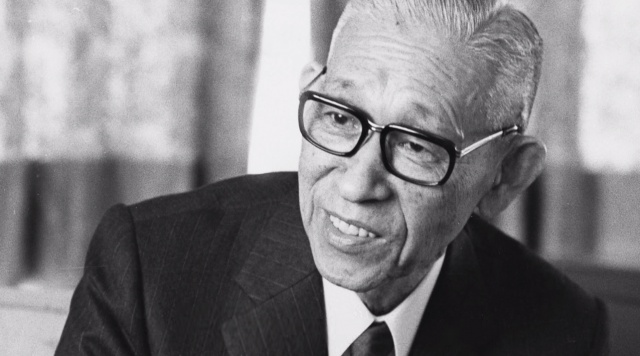
It is said that ‘ The best view comes after the hardest climb ‘ . From a childhood pushed into hardships, to losing loved ones, an apprentice post schooling, working strenuously long hours, starting a business without funds or support and facing the horrors of World War II, there emerged an entrepreneur, an amazing business leader, who by his sheer vision, astute management and a business philosophy, powered Japan’s miraculous economic growth post the WWII.
Referred to as the God of Management by the people of Japan, Konosuke Matsushita, instead of being overrun by all the harsh realities and pitfalls that came his way, carved out a path of progress and prosperity for himself and his countrymen. The founder of Matsushita Electric, under the umbrella of which Panasonic and Sanyo took wings in Japan and spread across the world, Konosuke Matsushita’s management principles and business philosophies still remain extremely relevant and have inspired many a business around the world.

A lot has been written about Matshushita and the way he built his corporations, but for me his business philosophy particularly during the Great Recession of 1929 and in the period just after the WWII, where Japan bled economically and the people suffered, is very interesting to ponder upon and understand. Matsushita’s guiding principles were referred to as Humanistic Management and had a three step approach, comprising of the following :
1. The unconditional support to Human Dignity
The hugely modest Matsushita strongly believed that people had to be treated with dignity and humility and this is how he dealt with his employees. Post the Great Recession and the WWII, things were difficult in Japan and Matsushita ensured that people got jobs, those who had jobs got job security. People were losing jobs across the world but Matsushita was strongly against layoffs. ( He moved people from manufacturing to sales when demand slipped and got them back into manufacturing to bolster supplies when demand picked up ). He delegated authority, empowered people and worked tirelessly to safeguard their future. This led to huge motivation amongst the employees. They worked with unquestionable commitment and delivered for Matsushita.
2. Integration of Ethical Reflection in Management Decisions
Every decision taken by Matsushita and his team had to be within the realms of strong ethics and virtues. He practiced restraint and tenacity and advocated sincerity and patience at work. The top management team had to welcome suggestions and take consensual decisions rather than thrust them down the staff. This again was an inspiring step which got huge support from the employees and unions, which translated into improved performances.
3. Active and consistent engagement with stakeholders.
Matsushita was very actively engaged with all the stakeholders in his business. Be it the employee, the supplier, the distributor or the customer, Matsushita ensured strong engagement with all of them. . He improved his products consistently, bettered supply chains and made products affordable to the consumer .There used to be conflicts too, but Matsushita treated all stakeholders equally and constantly resolved differences for the overall betterment of the community
This business philosophy of Matsushita coupled with his unflinching zeal to bring prosperity to his countrymen, accelerated the quick economic upturn in Japan and laid the foundations of an Economic Super Power.
Matsushita apart from being a pioneer of the industrial growth in Japan, wrote several books, opened academies for training people and was a major philanthropist. Matsushita died in 1989 aged 94 with his legacy still continuing and his corporations still practising his business philosophies.
Considering Matsushita’s contribution and his leadership in extremely difficult times, no wonder he is so revered not only in Japan but across the world…is a mighty lesson for all of us indeed.