
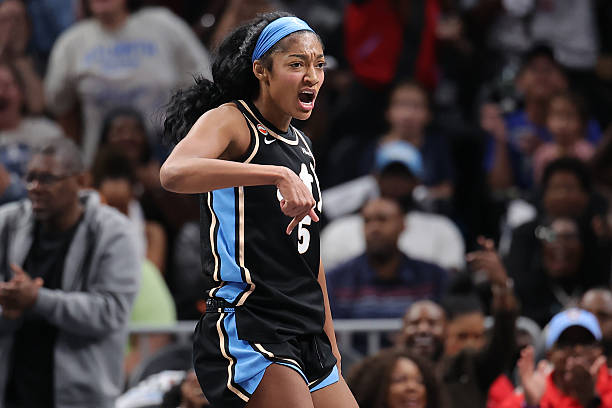

Angel Reese’s Game 3 clash with the New York Liberty has become the biggest talking point of the WNBA semifinals. Fans disagree over physical play, officiating and the Atlanta Dream’s run to the Finals. Although the Dream closed out the series with a Game 3 win, the arguments over Reese’s intensity continue.
How the Series Set the Stage
In fact, tension was already high before Game 3. In Game 2, Atlanta beat New York 101-98 in overtime. Reese finished with 23 points and seven rebounds, and she also hit the two biggest free throws of the night, which gave the Dream a three-point lead with 4.3 seconds left. However, Breanna Stewart answered with 35 points, 11 rebounds and six assists, a historic playoff line.
Still, one moment overshadowed the box score. Reese appeared to hook Stewart’s arm in overtime, yet no official blew the whistle. As a result, the broadcaster said Reese “knows she got away with it.” That play carried over into the next game, and Angel Reese’s Game 3 clash only added to it.
Double Technicals Add Fuel
During Game 3, officials gave Reese and Liberty star Jonquel Jones a technical foul each after a heated exchange. Even so, Atlanta still won, and as a result the double techs became a flashpoint. On one hand, supporters called it competitive fire. On the other hand, critics saw it as another example of Reese testing officials.
For many viewers, Angel Reese’s Game 3 clash showed how personal this series had become, because two physical frontcourts left little room for either side to back down.
Fans Split Over Reese’s Defensive Style
Online, the reaction divided sharply. For instance, some commenters accused the league of favouritism, with one calling the WNBA “corrupt”. In contrast, others defended Reese and said the contact on the hook play was minimal.
Reese won Defensive Player of the Year this season and has built her reputation on physical, disruptive defence. Therefore, her backers say that style is exactly why she is effective. Meanwhile, her detractors argue it often goes unpunished. Overall, Angel Reese’s Game 3 clash has become the latest test case for that debate.
Officiating Under the Microscope
Officiating was already a major storyline. After Game 2, Stewart said officials told her New York had no reset timeout in the final seconds. However, the Liberty later learned they did have one and filed an inquiry. Meanwhile, officials disputed her account, and after an investigation the league called the incident a “misunderstanding”.
Against that backdrop, every whistle drew scrutiny. Consequently, fans linked the timeout confusion, the Stewart no-call and Angel Reese’s Game 3 clash into one broader complaint about consistency.
What It Means for Atlanta
The Dream now head to the WNBA Finals with momentum, a strong defence and a star who thrives in the spotlight. For example, Jordin Canada and Naz Hillmon delivered key moments in the series. Likewise, Atlanta has handled adversity well, including Allisha Gray’s absence in Game 2.
For the Liberty, however, the loss ends a season full of questions about identity and coaching. For Reese, the attention is unlikely to fade. Indeed, Angel Reese’s Game 3 clash is now part of her postseason story, and the Finals will bring even more scrutiny.
FAQs
Q. What was Angel Reese’s Game 3 clash about?
A. Angel Reese’s Game 3 clash centred on a heated exchange with Liberty star Jonquel Jones, which led to double technical fouls. As a result, it added to the fan debate about Reese’s physical style.
Q. Did Atlanta win Game 3?
A. Yes. The Dream won Game 3 and advanced to the WNBA Finals.
Q. What was the Breanna Stewart no-call?
A. In Game 2 overtime, Reese appeared to hook Stewart’s arm, but officials did not call a foul. Fans and the broadcast team noticed it immediately.
Q. How did Reese perform in the series?
A. She scored 23 points with seven rebounds in Game 2 and made two crucial late free throws. In addition, she won the league’s Defensive Player of the Year award.