
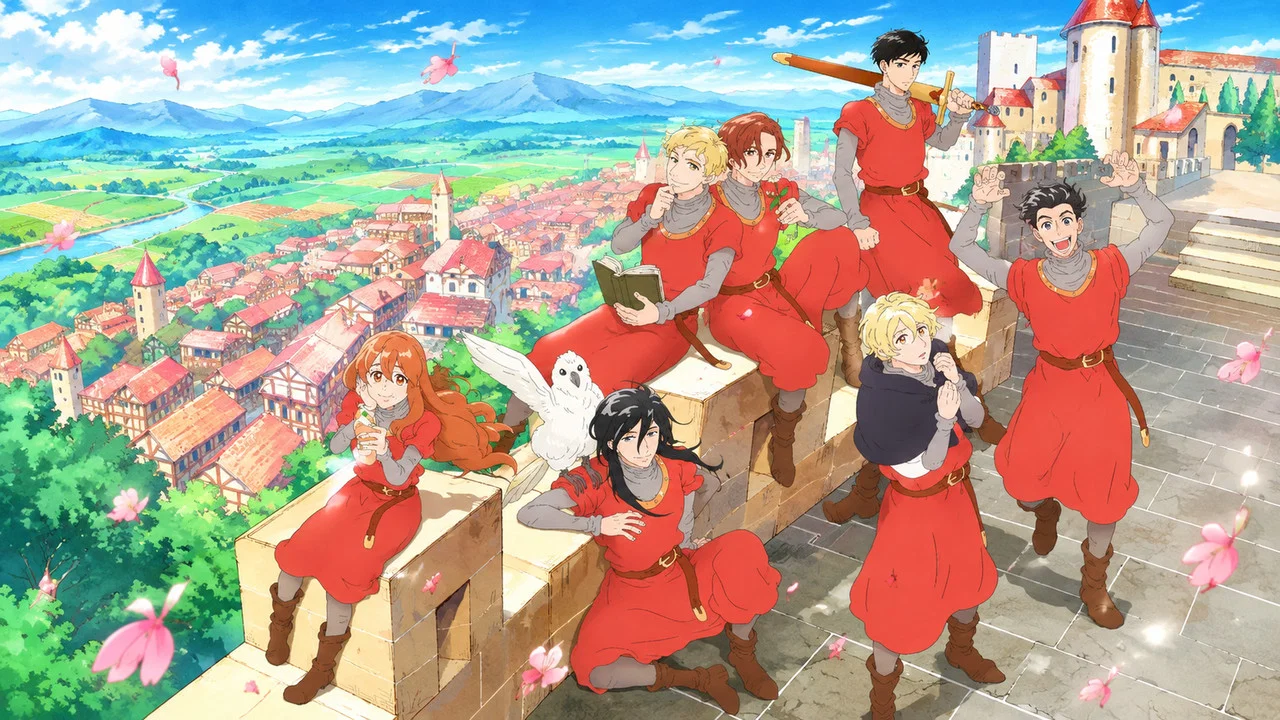
If you have spent any time in the fantasy anime space recently, you may have come across the name Seven Knights of the Marronnier Kingdom and wondered what exactly it is. The title sounds grand and the premise delivers on that promise. This is a series built around political intrigue, brotherly rivalry and the kind of worldbuilding that rewards patient viewers who enjoy piecing things together as the story unfolds.
The Basic Premise
Seven Knights of the Marronnier Kingdom is a fantasy anime based on a light novel series. The story is set in a continent divided into eight distinct kingdoms, each with its own culture, military strength and political agenda. At the centre of everything sits the Marronnier Kingdom, a once-powerful nation now navigating a delicate position between its neighbours.
The driving conflict begins with the death of the Marronnier King, which leaves the kingdom without a clear successor. Rather than a straightforward inheritance, the late king left behind seven sons from different mothers, each representing a different noble house and political faction. These seven brothers become the central figures of the series, and the entire story flows from the question of which one will claim the throne and what they are each willing to do to get there.
The Seven Brothers
The seven brothers are deliberately designed to contrast with one another in terms of personality, ability and moral outlook. Understanding each one is essential to following the story because the series refuses to give you a simple hero and villain dynamic.
The eldest brother, Aldric, is a military commander with the most obvious claim to the throne based on age and battlefield reputation. He is calculating, disciplined and not especially warm, but the show consistently challenges you to decide whether his methods are ruthless or simply realistic.
The second brother, Emile, is a diplomat who spent years negotiating treaties on the Marronnier Kingdom’s behalf. Where Aldric uses force, Emile uses conversation, and their ideological conflict becomes one of the series’ most compelling threads.
The third and fourth brothers, Renaud and Sylvain, are twins who operate as a unit throughout most of the story. They are the most unpredictable of the seven, with allegiances that shift depending on which option benefits both of them simultaneously.
The fifth brother, Cedric, is the youngest of the adult siblings and the one most viewers tend to root for initially. He is quieter than the others, more observant, and the narrative gives him the most screen time devoted to genuine character development rather than political manoeuvring.
The sixth and seventh brothers are younger still and spend the early episodes as pawns in the older brothers’ games before developing more independent agency as the series progresses. Their arcs are slower to unfold but ultimately pay off in ways that reframe earlier events.
Read More: Is Super Psychic Policeman Chojo Worth Watching? Powers, Characters, and Comedy Explained
The Eight Kingdoms
The eight kingdoms surrounding and including Marronnier are not simply a backdrop. Each one has a defined interest in who takes the Marronnier throne, and several of the brothers have formed alliances with foreign royal families that complicate every move made at home.
The neighbouring Kingdom of Varenthis is the most aggressive external power, openly favouring Aldric because his military background aligns with their own expansion goals. The Kingdom of Solenne, by contrast, prefers Emile because his diplomatic approach protects trade agreements that benefit them enormously.
The remaining five kingdoms range from openly neutral to quietly scheming, and part of the pleasure of following the series is watching each kingdom’s true intentions slowly reveal themselves through seemingly minor diplomatic exchanges.
What Kind of Show Is It?
Seven Knights of the Marronnier Kingdom sits closer to political drama than action fantasy. There are combat sequences and they are well choreographed, but the show is most alive during conversations, negotiations and the moments where a character realises they have been outmanoeuvred without a single sword being drawn.
Viewers who enjoy Game of Thrones style storytelling, where the real battles happen in rooms rather than on fields, will find a lot to appreciate here. The pacing is deliberate and the series trusts its audience to keep track of a fairly complex web of relationships.
Is It Worth Your Time?
If you enjoy fantasy storytelling that prioritises character motivation and political consequence over spectacle, absolutely. Seven Knights of the Marronnier Kingdom builds a world that feels genuinely inhabited, with stakes that matter because the show takes the time to make you care about the people involved before putting them in danger.
It is the kind of series that gets better the more attention you give it.
Read More: Why Vinland Saga Season 2 Is Better Than Season 1